

.png)


In one of Canada’s most diverse communities, a new study is revealing that kidney disease does not affect everyone equally. At Scarborough Health Network, Dr. Tabo Sikaneta, Nephrologist and Clinical Researcher, is using local data to better understand who is most at risk and how earlier intervention could change outcomes.
For patients like Maureen Skeete, those findings are deeply personal. Three nights a week, she receives overnight dialysis at SHN’s General Hospital, a life-sustaining treatment that has become part of her routine.
“Dialysis becomes part of your life,” Maureen shared. “You plan around it and sometimes feel like it interrupts your life, but you also learn that you’re stronger than you think.”
Published in BMJ Open, the study examined local patient data and found that country of birth is a stronger predictor of dialysis risk than ethnicity alone, with immigrants from the Caribbean, the Philippines, and Sri Lanka being six to twelve times more likely to require dialysis than Canadian-born residents, putting them at a particularly high risk of end-stage kidney disease.

Maureen, who was born in Barbados, was diagnosed only after her kidney disease had already progressed to near end-stage. Like many patients, she had been managing high blood pressure for years without realizing the impact on her kidneys.
The idea for the study came from what Dr. Sikaneta was seeing firsthand in Scarborough hospitals. “What I was seeing on the dialysis units didn’t feel random,” he said. “I wanted to formally understand who was making up this increased kidney disease, and whether there were patterns we weren’t addressing early enough.”
The research also found that risk does not decrease over time, even for immigrants who have lived in Canada for decades, highlighting the need for earlier and more targeted screening strategies.
“If I had known earlier, things might have been different,” Maureen said. “Now I want others to know so they can take action sooner.”
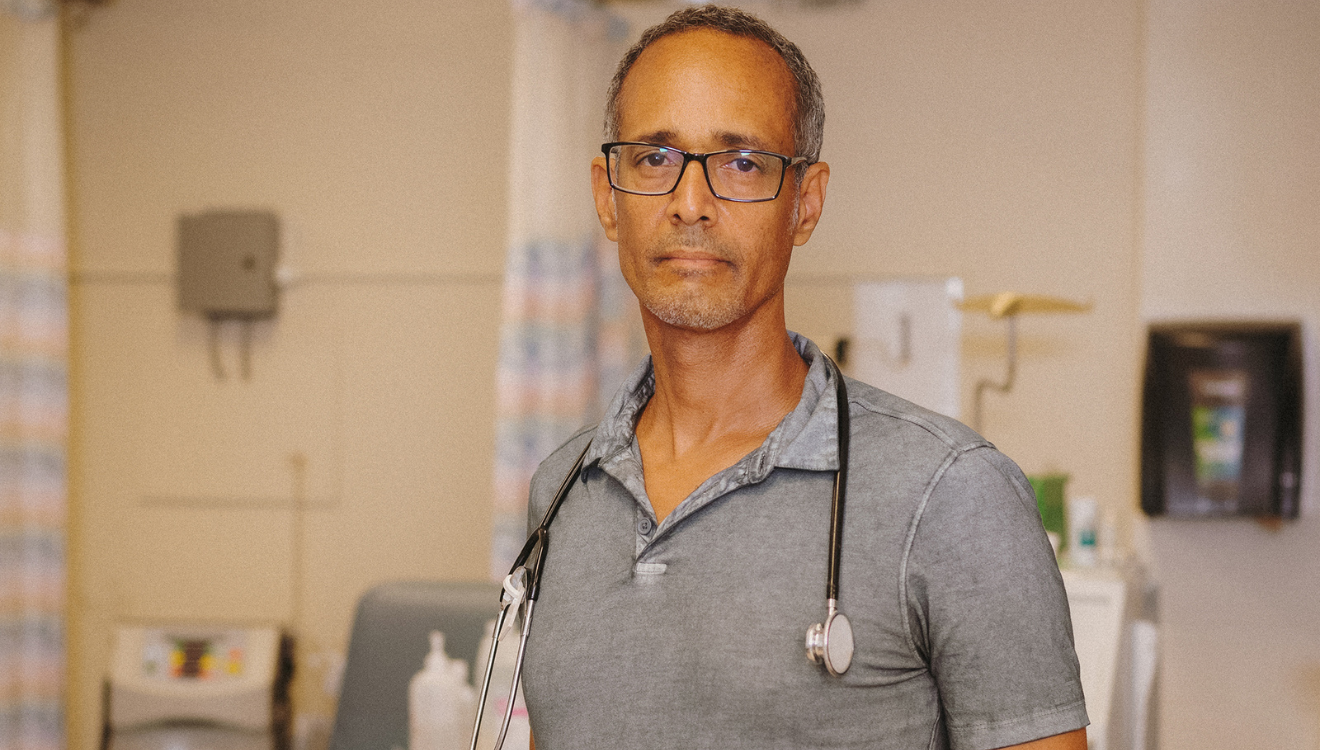
Dr. Sikaneta added, “Based on these results, we can start to think toward solutions, including redesigning kidney disease screening to be more targeted and effective. We could set an example with earlier screening right here in Scarborough.”
Today, Maureen continues her care at SHN, supported by a team that has helped her adjust to life on dialysis. “The nurses and doctors here really look after you,” she said. “They make sure you don’t feel alone.”
This work reflects SHN’s broader commitment to research and education, using local data to inform smarter, more equitable care models that can be scaled and adapted to other communities. By identifying risk earlier and focusing on those most affected, this research aims to improve outcomes and strength the healthcare system.
Supporting the Love, Scarborough campaign helps fund research like Dr. Sikaneta’s and SHN’s new dedicated Education & Research Centre, ensuring our care is not only high- quality, but responsive to the needs of our diverse community.
This Kidney Month, stories like Maureen’s remind us why this work matters and how together, we can keep climbing toward better, more equitable care for all.
Read Dr. Sikaneta's feature story on The Toronto Star.
Join our newsletter for updates on projectsand events.
